

Your silence, or the friction of voice?
- Nite Tanzarn
- Jan 31
- 4 min read

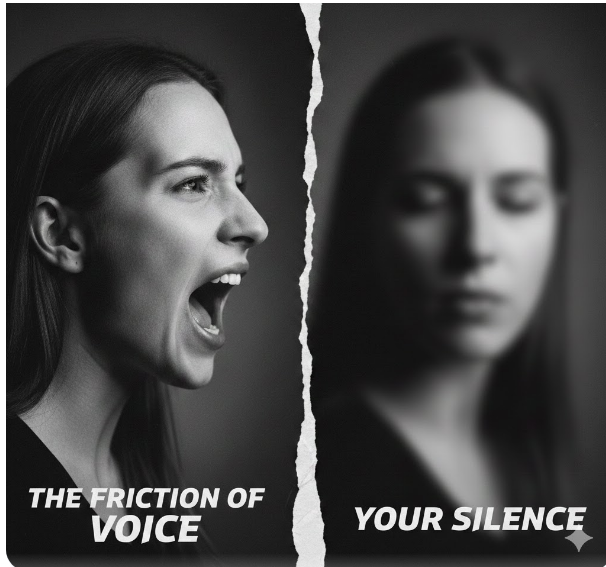
I am a quiet person. My natural reserve is often misread as pride. Yet, I am relentlessly vocal. I say and write the things marked taboo. This contradiction has earned me a label. Rebel. The label is correct. To break a profound silence, you must first become a fracture in the expectation of quiet. This is not about personality. It is about principle. The silence I break is not my own quiet nature. It is the enforced quiet around injustice. That quiet is not peace. It is a substance. It has weight and function. In the machinery of justice, silence is the lubricant that allows the gears of inequality to grind on, uninterrupted. It is the approved response. To speak is to introduce friction. This is especially true for gender equality and women’s rights across Africa. The choice is not between speaking and silence. It is between complicity and interruption.
What does your silence protect?
We must understand its impact. Silence is not neutral. It is a political condition. When injustice occurs, silence is the easiest path. It is also the most corrosive. It functions as tacit consent. It allows harmful systems and individual acts to operate without witness. The impact is a series of deliberate absences.
It perpetuates inequality by letting discriminatory practice stand unchallenged. It isolates those who are targeted, making their experience a solitary burden. It enables perpetrators by providing the cover of communal non-reaction. It hinders all progress by preventing the essential, difficult dialogue that must precede reform. In many communities, patriarchal norms are enforced through this silence. A woman is discouraged from speaking against violence. That silence is not her failing. It is the system’s design. It protects the status quo by masking its effects. When we choose silence, we become part of that machinery. We become complicit in its function.
What actually shatters when you speak?
Breaking this silence is the first forensic act of justice. It creates a space for evidence. It validates experience not as anecdote, but as testimony. When women and advocates speak, they do not just share stories. They issue a challenge. They dissect a norm. This act has a material effect.
It forces awareness of violence and discrimination into the public record. It makes the private, public. This awareness creates the necessary pressure for policy change. It builds community support not on pity, but on documented solidarity. It initiates a cultural shift by providing a counter-narrative. Grassroots movements across Africa demonstrate this. They began as a voice breaking a specific silence. A voice saying this violence happened. This marriage is wrong. This exclusion is deliberate. That single voice becomes a chorus. The chorus becomes a movement. The movement becomes a political fact. It starts by rejecting the premise that some pain is meant to be borne quietly.
Is your silence a moral position?
The phrase ‘silence is complicity’ is not just an activist slogan. It is a theological and ethical stance. In biblical teaching, silence in the face of wrongdoing is a failure to uphold justice. The prophet Isaiah does not call for quiet reflection. He calls for a voice to cry out. The story of Esther is not about passive prayer. It is about strategic, risky speech to confront power.
This framework removes neutrality as an option. It defines justice as an active pursuit. It frames the voiceless not as those without sound, but as those without a platform. The moral imperative is to provide that platform. To be the amplifier. This makes breaking silence a spiritual duty, not merely a political one. It roots the action in a tradition of protest. What is your faith if it does not defend the oppressed? What is your morality if it is silent before injustice?
How does voice become a tool, not just sound?
Speaking is the first step. It is not the last. Voice must be coupled with deliberate, targeted action. The goal is not to be heard, but to change something. Here are practical steps.
Educate yourself with precision. Do not settle for awareness. Understand the mechanisms. How does this law fail? Where is the policy gap? Share this analysis, not just sentiment.
Create safe spaces for testimony. The dialogue must be structured to protect the speaker. The goal is not conversation. It is evidence gathering and strategy building.
Support survivors with material action. Emotional support is required. Amplification is better. Connect them to legal aid, to networks, to resources that translate speech into leverage.
Engage policymakers with clear demands. Write submissions that specify legislative clauses. Attend forums with proposed amendments. Do not just lament the problem. Draft the solution.
Use your platform to escalate. Social media is a megaphone. Use it to name issues and tag authorities. Use it to coordinate action. Move from discussion to disruption.
Lead by example. Model the speech you demand. Call out the subtle comment. Reject the casual bias. Make your daily environment one where silent consent is impossible.
Will you be the grit in the machine?
A single voice is a protest. A collective voice is a new reality. The future is built by those who dismantle the architecture of silence brick by brick. Across Africa, this work is visible. It is in communities that now shame perpetrators openly. It is in bylaws rewritten because women’s groups presented incontestable testimony. This is not inspiration. It is engineering.
NITE TANZARN IntellectNest works in this engineering. Through research, we provide the blueprint. Through training, we supply the tools. Through consultancy, we help assemble the structure. But the work requires all. It requires you to listen with the intent to act. It requires you to learn with the purpose of teaching. It requires you to speak into the silence until the silence shatters.
Your voice is not just sound. It is a tool. It is a wedge. It is a foundation. The question is not whether you have something to say. The question is what you will build once you have said it.
Will you be the lubricant for the machine, or the grit that stops its gears?
Will you mistake your silence for peace, when it is really a pact with oppression?
When the history of this justice is written, will your name be in the footnotes of complicity, or in the chapters of change?
The work is here. The silence is yours to break.


The friction of voice, of course. Unfortunately, many of us tend to not speak out.